Bridging the Divide: How Forward-Thinking Medical Schools Are Closing the Rural Health Education Gap
More than 60 million Americans reside in rural communities, yet fewer than 10 percent of the nation's physicians choose to practice in those areas. The consequences of this imbalance are measurable and severe: higher rates of chronic disease, elevated maternal mortality, delayed cancer diagnoses, and limited access to behavioral health services. For decades, healthcare policy experts have debated systemic solutions, yet one foundational element of the problem has frequently been overlooked — the curricula within America's medical schools.
Traditional medical education has long been anchored in large academic medical centers located in metropolitan areas. Students rotate through specialty departments, interact with cutting-edge diagnostic technology, and benefit from the institutional resources that urban teaching hospitals provide. These are valuable experiences. However, they do not adequately replicate the clinical reality that a physician will encounter when serving a community of 3,000 people in rural Appalachia, the Mississippi Delta, or the high plains of the Dakotas.
The Competency Disconnect in Traditional Training
Physicians practicing in rural settings frequently serve as their patient's primary care provider, urgent care clinician, mental health resource, and sometimes their only accessible medical professional within a 50-mile radius. The breadth of clinical skills required in these environments is substantially different from what is demanded in urban specialty practice.
Dr. Sandra Morrow, a family medicine physician who has practiced in rural eastern Kentucky for nearly two decades, describes the adjustment she faced after completing her residency at a large urban hospital. "I graduated feeling confident in a narrow set of skills. When I arrived here, I was performing minor surgical procedures, managing obstetric emergencies, and counseling patients through opioid addiction — often in the same afternoon. My training had not prepared me for that scope."
This sentiment reflects a broader pattern documented in medical education research. A 2022 report from the National Rural Health Association found that fewer than 15 percent of graduating medical students reported feeling "well-prepared" for the clinical autonomy and breadth of practice characteristic of rural medicine. The data suggests that the competency gap is not a matter of physician intelligence or dedication — it is a structural failure within educational design.
Innovative Curricula Taking Root Across the Country
A growing number of medical schools are responding to this challenge with meaningful curricular reform. Regional medical campuses, rural track programs, and longitudinal integrated clerkships (LICs) are among the most promising developments in this space.
The University of North Dakota School of Medicine and Health Sciences, which serves a state with vast rural geography, has long embedded rural health training into its core curriculum. Students in its Indians Into Medicine program receive culturally specific training alongside clinical rotations in tribal and frontier communities. The model has demonstrated measurable success in producing physicians who return to practice in underserved areas.
Similarly, the University of Washington's WWAMI program — a consortium spanning Washington, Wyoming, Alaska, Montana, and Idaho — distributes medical training across regional sites, deliberately exposing students to rural clinical environments during their formative years. Research on WWAMI graduates consistently shows higher rates of rural practice compared to national averages.
Longitudinal integrated clerkships represent another structural innovation. Rather than rotating through individual specialty departments in brief, disconnected blocks, students in LIC programs spend an extended period — often an entire academic year — embedded within a community-based practice. They follow patients over time, develop therapeutic relationships, and experience the full spectrum of primary care. Studies published in Academic Medicine have found that LIC graduates report higher levels of preparedness for independent practice and demonstrate stronger patient-centered communication skills.
Simulation and Technology as Training Equalizers
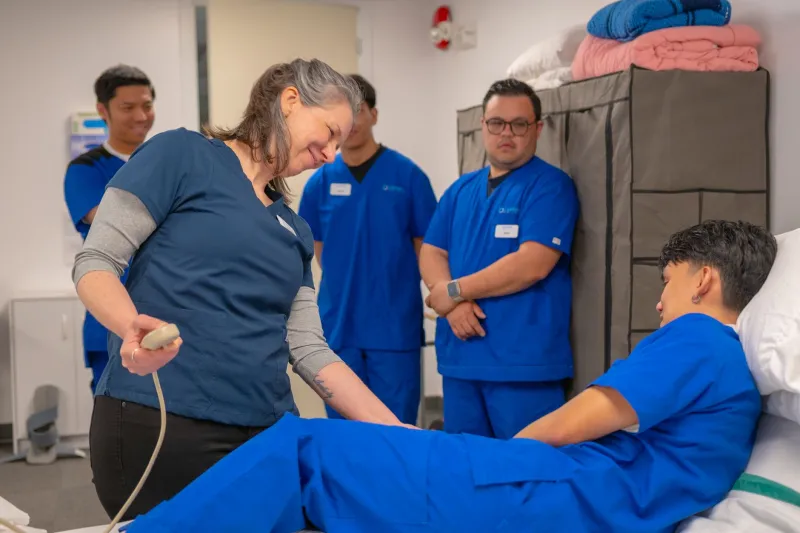
Beyond structural changes to rotations, simulation-based learning has emerged as a critical tool for preparing students for the procedural demands of rural medicine. High-fidelity simulation environments allow students to practice emergency deliveries, trauma stabilization, intubation, and point-of-care ultrasound in controlled settings before encountering these situations with real patients.
At Zarmed University Health, we recognize that simulation technology is increasingly accessible through online and hybrid learning platforms, enabling medical educators to deliver scenario-based training to students regardless of geographic location. This democratization of simulation learning is particularly significant for regional campuses and rural training sites that may lack the physical infrastructure of major academic centers.
Telehealth training has also become a critical component of rural medical education. Physicians practicing in rural communities are increasingly utilizing telehealth to consult with specialists, monitor chronic disease patients, and extend their reach to homebound individuals. Medical schools that integrate telehealth competency into their curricula are equipping graduates with a skill set that is now fundamental to rural practice.
Mentorship and Pipeline Programs: The Human Element
Data consistently shows that one of the strongest predictors of rural practice is rural origin. Physicians who grew up in small towns and agricultural communities are significantly more likely to return to similar settings after training. This insight has catalyzed the development of rural pipeline programs that recruit students from underserved areas, provide financial support, and create mentorship connections with practicing rural physicians.
The National Health Service Corps Scholarship Program, administered by the Health Resources and Services Administration (HRSA), offers a compelling federal model: in exchange for loan repayment or scholarship funding, physicians commit to practicing in Health Professional Shortage Areas. Pairing this financial incentive with robust rural training curricula creates a powerful combination.
Mentorship, however, extends beyond financial arrangements. Medical students who are paired with rural preceptors early in their training develop a realistic understanding of rural practice life — including its professional satisfactions as well as its challenges. Exposure to physicians who have found meaning and career longevity in underserved settings can reshape a student's assumptions about what a fulfilling medical career looks like.
The Path Forward for Medical Educators
Addressing the rural physician shortage will require sustained commitment from medical school administrators, accreditation bodies, federal policymakers, and clinical training sites. Curricular reform alone is insufficient; it must be accompanied by adequate funding for rural training infrastructure, incentives for faculty development at regional campuses, and accreditation standards that explicitly recognize rural health competencies.
For medical educators and healthcare professionals seeking to contribute to this transformation, Zarmed University Health offers continuing education resources focused on rural health training models, telehealth integration, and community-based medical education. Advancing medical excellence means ensuring that excellence reaches every community — not solely those with proximity to urban academic centers.
The physicians who will serve rural America in the next generation are sitting in medical school classrooms today. Whether they are being prepared for that service depends entirely on the educational choices being made right now.