Competence Without Consultation: Why Medical Training Must Teach Physicians to Know the Limits of Their Own Knowledge
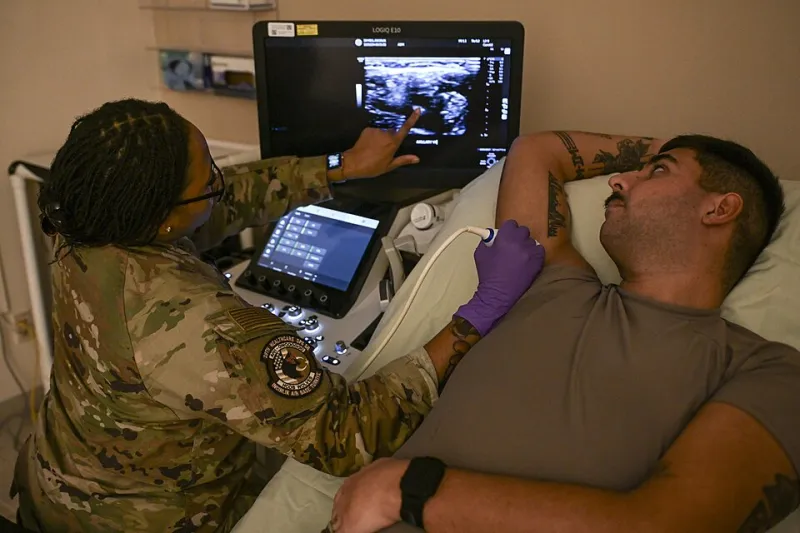
Photo: U.S. Air Force photo by Senior Airman Haiden Morris, Public domain, via Wikimedia Commons
There is a paradox at the center of American medical education. Training programs are extraordinarily effective at producing physicians who can make high-stakes decisions under pressure, synthesize complex clinical information, and project the kind of confidence that patients rely upon in moments of vulnerability. What those same programs rarely teach — and what patient outcomes data suggests is critically important — is when to stop, recognize the edge of one's own competence, and ask for help.
This is not a soft skill. It is a clinical imperative, and the failure to teach it formally has measurable consequences.
The Architecture of Medical Overconfidence
The structure of medical training in the United States is, in many respects, a confidence-building apparatus. Students are selected for intellectual achievement, trained to master vast bodies of knowledge, evaluated through high-stakes examinations that reward individual performance, and progressively granted greater clinical autonomy as they advance. At each stage, the implicit signal is the same: mastery is the goal, and mastery means knowing.
What this architecture does not adequately address is the cognitive and professional complexity of not knowing — of encountering a clinical presentation that sits outside one's training, a patient whose condition intersects multiple subspecialties, or a situation in which the judgment of a nurse, a specialist, or even the patient themselves would meaningfully improve the decision being made.
Research on diagnostic error in U.S. hospitals consistently identifies overconfidence and premature closure — the tendency to stop seeking information once a working diagnosis feels sufficient — as leading contributors to preventable harm. A 2023 study published in BMJ Quality and Safety estimated that diagnostic errors affect approximately 795,000 Americans annually, resulting in serious harm or death in a significant proportion of cases. The physicians involved were not, in most instances, negligent or indifferent. They were operating within the confidence frameworks their training had built.
What Intellectual Humility Looks Like in Practice
Intellectual humility, as a clinical concept, is distinct from self-doubt. It does not mean hesitating before every decision or deferring to others in ways that undermine effective care. It means maintaining an accurate, calibrated awareness of what one knows, what one does not know, and what resources — human and otherwise — are available to improve the quality of a decision.
In practice, this manifests in several specific behaviors. It means a primary care physician recognizing when a patient's presentation warrants cardiology input rather than managing it independently. It means a surgeon pausing to discuss a complex case with a colleague before proceeding. It means a physician genuinely incorporating a patient's own account of their symptoms and preferences rather than filtering that account through a predetermined diagnostic framework. And it means treating the insights of experienced nurses — who often possess granular knowledge of patient trajectories that attending physicians lack — as clinically relevant rather than hierarchically subordinate.
Each of these behaviors requires a specific kind of training to become habitual.
Frameworks for Teaching Humility as Competence
Several evidence-informed educational frameworks have demonstrated effectiveness in cultivating intellectual humility among medical trainees. Structured case-based learning that explicitly incorporates moments of uncertainty — presenting cases where the correct answer was to consult, to pause, or to acknowledge incomplete information — normalizes these behaviors as signs of clinical sophistication rather than inadequacy.
Interprofessional education (IPE) programs, which train medical students alongside nursing, pharmacy, and allied health students, have shown particular promise. When physicians-in-training observe the expertise that other members of a care team bring to complex clinical scenarios, the hierarchical assumptions that inhibit consultation are more likely to be disrupted. The Association of American Medical Colleges has increasingly emphasized IPE as a component of competency-based medical education, though implementation across institutions remains uneven.
Debriefing protocols in simulation environments offer another vehicle. When students are trained to narrate their decision-making process aloud — including the moments when they were uncertain and how they resolved that uncertainty — the cognitive habits that underpin intellectual humility become visible and teachable.
Reframing Consultation as Clinical Excellence
The cultural shift required here is significant. In many clinical environments, consultation is implicitly coded as an admission of limitation — something to be avoided when possible and minimized when necessary. Changing that norm requires deliberate counter-messaging at every level of training.
Faculty who model consultation openly, who say to students "I'm not certain about this, and I'm going to call cardiology" rather than projecting false certainty, create permission structures that trainees carry forward. Institutional recognition of collaborative decision-making — in performance evaluations, in case conferences, in the way clinical excellence is publicly defined — reinforces that message at the systemic level.
At Zarmed University Health, we hold that the most dangerous physician is not one who lacks knowledge. It is one who does not know what they do not know — and has never been taught to ask. Intellectual humility is not the opposite of clinical competence. It is, in the most rigorous sense, its highest expression.