Teaching Medicine Without Teaching Dying: The Case for Mandatory Palliative Care in Medical Curricula
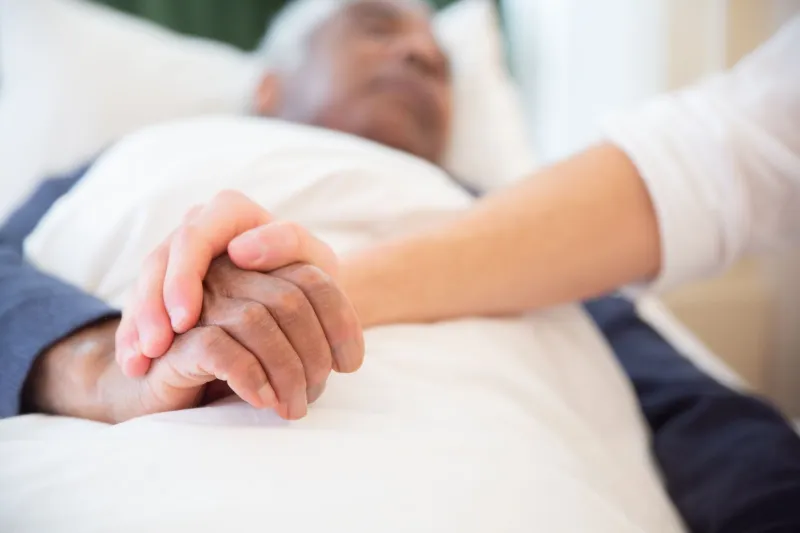
Medicine is, at its core, a discipline built around the promise of healing. American medical schools reflect that orientation in virtually every dimension of their curricula — from the cellular biology of disease to the pharmacological mechanisms of intervention. Yet there is a dimension of clinical practice that receives comparatively little formal attention, despite the certainty that every physician will encounter it throughout their career: the care of patients who are dying.
Palliative care — the specialized field focused on relieving suffering, managing symptoms, and supporting patients and families through serious or terminal illness — remains one of the most inconsistently taught subjects in U.S. medical education. At many institutions, exposure to palliative principles is confined to a single elective rotation, a brief module tucked into a broader clinical skills course, or a few hours of lecture distributed across four years of training. The result is a generation of physicians who are technically proficient but emotionally and clinically underprepared for end-of-life care.
This is not a minor curricular gap. It is a structural failure with measurable consequences for patients, families, and physicians themselves.
The Scope of the Problem
Approximately 2.8 million Americans die each year. A significant proportion of those deaths occur in hospitals, under the care of physicians who have received little to no formal training in palliative medicine. Studies have consistently shown that patients with serious illness frequently receive aggressive, curative-oriented interventions well past the point at which those interventions serve their wishes or improve their quality of life. Unnecessary hospitalizations, late referrals to hospice, and inadequate pain management remain persistent problems in American healthcare — problems that are, in part, a downstream consequence of how physicians are trained.
The National Academy of Medicine has called for better integration of palliative care education across health professions training. The Liaison Committee on Medical Education, which accredits U.S. and Canadian medical schools, has acknowledged the importance of end-of-life care competencies. Yet acknowledgment has not translated into consistent structural change. Palliative care content remains unevenly distributed across institutions, and where it does exist, it is rarely sequenced in a way that allows students to develop and refine their skills over time.
Why the Curriculum Resists Change
The reluctance to embed palliative care more deeply into medical training reflects several interconnected forces. First, there is the cultural orientation of academic medicine itself. Institutions that produce top-tier researchers and specialists tend to measure educational success through the lens of diagnostic acuity, procedural competence, and disease management. Conversations about prognosis, goals of care, and comfort-focused treatment do not carry the same intellectual prestige — despite requiring an equally sophisticated set of clinical and interpersonal skills.
Second, there is a persistent and largely unexamined discomfort with death that permeates medical training. Medical students frequently report that discussions of dying feel taboo in clinical settings, that attending physicians model avoidance rather than engagement, and that expressing uncertainty about curative options is implicitly discouraged. When the hidden curriculum teaches physicians to equate death with failure, it becomes difficult for the formal curriculum to teach them that supporting a peaceful death is a form of clinical success.
Third, curricular real estate is genuinely scarce. Medical schools face intense pressure to cover an expanding body of scientific and clinical knowledge within a fixed training period. Palliative care advocates often find themselves competing with other underfunded priorities — health equity, behavioral health, preventive medicine — for the same limited hours.
What Earlier Exposure Would Accomplish
The argument for integrating palliative care earlier and more intentionally into medical education is not simply an ethical one, though the ethical case is strong. It is also a practical one.
Physicians who receive structured training in palliative principles — including symptom management, prognostic communication, goals-of-care conversations, and family support — are better equipped to navigate the most emotionally and clinically complex moments of medical practice. They are less likely to default to aggressive intervention when it does not align with patient values. They are more capable of having honest, compassionate conversations about prognosis without abandoning hope. And they are more resilient when confronted with patient death, because they have been taught to understand it as a clinical reality rather than a personal defeat.
Institutions that have piloted longitudinal palliative care curricula — introducing foundational concepts in the first year and building on them through clinical rotations — have reported meaningful improvements in student confidence and communication skills. Students who observe skilled palliative care clinicians early in training internalize different models of what excellent doctoring looks like. The effect is cumulative: when palliative principles are woven into the fabric of training rather than appended at the end, they become part of how physicians think, not simply what they know.
A Framework for Integration
Meaningful reform in this area does not require wholesale restructuring of existing curricula. It requires intentionality and sequencing. Several principles should guide the effort.
Introduce foundational concepts in the preclinical years. First- and second-year students are capable of engaging with the philosophy and ethics of end-of-life care, the epidemiology of serious illness, and the basic principles of symptom management. Early exposure normalizes palliative thinking and creates a foundation for clinical application.
Embed palliative competencies across core clinical rotations. Rather than confining palliative education to a standalone elective, medical schools should ensure that internal medicine, surgery, oncology, neurology, and other core clerkships explicitly address goals-of-care communication and comfort-focused management. Palliative care should feel relevant across specialties — because it is.
Require structured clinical contact with palliative care teams. Didactic instruction alone is insufficient. Students need to observe and participate in palliative care consultations, family meetings, and hospice visits. Direct exposure to skilled practitioners is among the most effective educational interventions available.
Assess palliative competencies formally. What is measured is what is taken seriously. Incorporating palliative care skills into clinical evaluations, Objective Structured Clinical Examinations, and residency preparation signals that these competencies are non-negotiable components of medical training.
The Physician on the Other Side
There is another dimension to this conversation that receives insufficient attention in discussions of palliative education: the well-being of physicians themselves. Clinicians who are not trained to process patient death, who lack frameworks for navigating moral distress, and who have no language for grief in clinical settings are at significantly elevated risk for burnout and compassion fatigue.
Palliative care education, when done well, does not simply teach physicians how to help dying patients. It teaches them how to be present with suffering without being consumed by it. That is a skill with profound implications for physician sustainability — a dimension of training that aligns directly with the broader institutional commitment to resident and practitioner wellness.
Conclusion
American medical education has made remarkable strides in preparing physicians to diagnose, treat, and cure. It has been far less deliberate about preparing them to accompany patients through the experiences that cannot be cured. Palliative care is not a specialty that belongs only to specialists. It is a dimension of clinical practice that belongs to every physician who will ever sit with a patient facing the end of their life — which is to say, every physician.
The curriculum that neglects this reality is not simply incomplete. It is doing a disservice to patients, to families, and to the physicians it trains. The path forward requires institutional courage: the willingness to treat dying as a subject worthy of the same rigor, structure, and investment that American medical schools apply to everything else they teach.