Succeeding in Silence: How Medical Training Breeds Self-Doubt in Its Most Capable Trainees
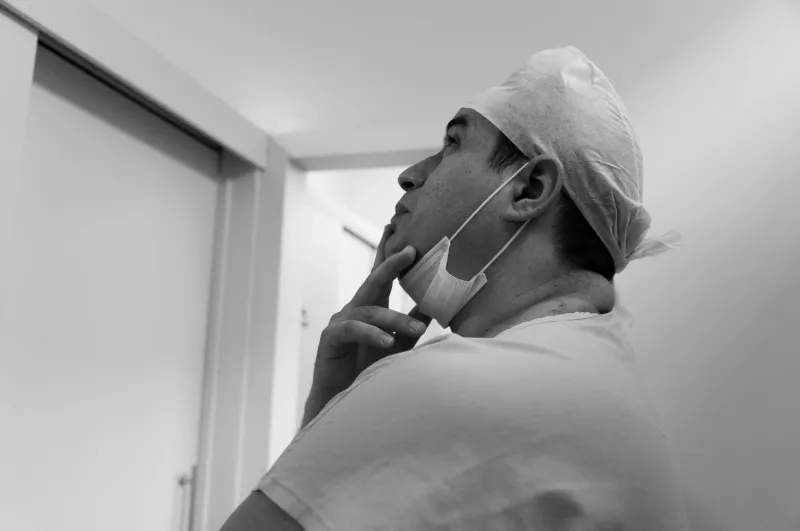
There is a particular cruelty in a system that selects for excellence and then convinces its most accomplished members that their success was accidental. Across medical schools and residency programs throughout the United States, a significant proportion of trainees carry a quiet but corrosive belief: that they do not truly belong, that their achievements reflect luck rather than ability, and that it is only a matter of time before someone discovers the truth. This is not a fringe experience. Researchers estimate that impostor phenomenon affects anywhere from 30 to 82 percent of medical students and residents, depending on the population studied. Yet despite its prevalence, it remains poorly addressed within formal medical education curricula.
Understanding this gap—and why it persists—requires looking honestly at what medical training rewards, how it evaluates performance, and what it inadvertently teaches trainees about the relationship between competence and self-worth.
A System Built for Doubt
Medical education in the United States is, by design, an environment of perpetual evaluation. From the MCAT through Step exams, clinical rotations, shelf tests, residency interviews, and board certifications, trainees are continuously ranked, scored, and assessed against one another and against fixed standards. This structure serves important purposes: medicine demands rigor, and patients deserve physicians whose competence has been genuinely verified.
However, when high-stakes evaluation becomes the primary lens through which trainees understand their own worth, something problematic occurs. Performance becomes identity. A strong score feels like confirmation of belonging; a poor one feels like exposure. The result is a cohort of individuals who have succeeded at every measurable threshold yet remain profoundly uncertain about whether that success reflects anything real about their abilities.
This dynamic is intensified by the culture of perfectionism that permeates many training environments. In settings where admitting uncertainty is perceived as weakness and where errors—inevitable in any learning process—carry outsized professional and emotional consequences, trainees learn to suppress vulnerability rather than process it. The gap between what they present outwardly and what they experience internally widens over time, and impostor feelings fill that space.
Why Competence Does Not Automatically Produce Confidence
One of the most important misconceptions about impostor phenomenon is that it will resolve on its own once a trainee accumulates enough experience. The logic seems sound: if the problem is self-doubt, then demonstrated competence should eventually extinguish it. In practice, this rarely happens without deliberate intervention.
Research on the impostor phenomenon, first described by psychologists Pauline Clance and Suzanne Imes in 1978, suggests that individuals who experience it tend to attribute success to external factors—favorable circumstances, an easy exam, a lenient attending—while internalizing failure as evidence of fundamental inadequacy. Each success is discounted; each setback is magnified. Without a framework for interpreting achievement differently, accumulating credentials does not build authentic confidence. It simply raises the stakes of eventual exposure.
For medical trainees, this pattern carries clinical consequences that extend well beyond individual well-being. Physicians who do not trust their own judgment are more likely to over-rely on confirmatory testing, to defer decisions unnecessarily, or conversely, to overcompensate through performative certainty that forecloses important diagnostic inquiry. Neither response serves patients well. The development of authentic clinical confidence—grounded in actual skill rather than external validation—is not a soft outcome. It is a core component of physician readiness.
The Role of Medical Educators
Addressing impostor phenomenon at scale requires institutional commitment, not individual resilience. While coping strategies matter, framing self-doubt primarily as a personal problem to be managed places the burden on the very trainees the system has inadvertently harmed. Medical educators are positioned to intervene at a structural level.
Normalize uncertainty as a professional value. When faculty openly acknowledge the limits of their own knowledge—discussing cases where they were initially wrong, describing the discomfort of diagnostic ambiguity, and modeling intellectual humility—they signal to trainees that uncertainty is not evidence of inadequacy. It is a feature of medicine practiced honestly.
Decouple evaluation from identity. Programs can create intentional space between performance metrics and a trainee's sense of professional self. This means designing feedback conversations that distinguish between a specific skill gap and a global judgment about competence, and training faculty to deliver assessment in ways that are specific, developmental, and forward-looking rather than purely evaluative.
Create structured opportunities for trainees to articulate their own growth. Reflective exercises—such as guided journaling, portfolio-based assessments, or facilitated small-group discussions—allow trainees to document their own competence development in their own words. Over time, this builds an internal evidence base that trainees can draw on when self-doubt is loudest.
Address demographic dimensions directly. Impostor phenomenon does not affect all trainees equally. Research consistently shows higher rates among women, first-generation college students, and physicians from racial and ethnic groups that remain underrepresented in medicine. For these trainees, self-doubt is often compounded by structural messages—implicit and explicit—that they do not belong. Programs committed to equity must recognize that impostor phenomenon is not merely a psychological phenomenon; it is also a social one.
Rethinking What Confidence Looks Like in Clinical Training
Authentic clinical confidence is not the absence of doubt. It is the capacity to act competently in the presence of uncertainty, to seek consultation without shame, and to recognize the boundaries of one's knowledge without interpreting those boundaries as failure. This kind of confidence is not taught by eliminating vulnerability from training environments. It is built by taking vulnerability seriously as a component of professional development.
Programs that have begun integrating wellness curricula, peer support structures, and faculty development around psychological safety are beginning to demonstrate that this work is feasible within the constraints of medical education. It does not require dismantling the rigor that makes physician training meaningful. It requires ensuring that rigor is applied to the full scope of what physicians need to become—including the capacity to know what they know, trust what they have learned, and practice medicine without being undone by the fear of being found out.
Moving Forward
The trainees most affected by impostor phenomenon are, almost by definition, the ones who care most about doing their work well. That investment in excellence is precisely what medical education should cultivate. The task before educators is not to protect trainees from challenge, but to ensure that the challenges they face build genuine capability rather than eroding the belief that they are capable at all.
At Zarmed University Health, we believe that preparing physicians for clinical excellence means attending to the psychological architecture of training as seriously as its academic content. Competence, unaccompanied by the confidence to deploy it, is an incomplete education. The field owes its trainees—and ultimately its patients—something more complete than that.