From Cadavers to Code: How AI and Simulation Are Redefining Clinical Skill Development
For generations, medical education in the United States followed a familiar arc: lecture halls, textbooks, cadaver labs, and the time-honored — if occasionally harrowing — tradition of learning by doing on real patients. That model produced generations of competent physicians, but it also carried well-documented limitations: inconsistent exposure to rare conditions, variable feedback quality, and an uncomfortable reliance on patient encounters as the primary training ground for novice clinicians.
Today, that arc is bending sharply. Artificial intelligence and advanced simulation technologies are being woven into undergraduate and graduate medical education at an accelerating pace, promising more consistent skill-building, personalized learning pathways, and measurable competency benchmarks. The implications for how medical schools and residency programs design their curricula are profound — and the conversation is only beginning.
The Rise of the Virtual Patient
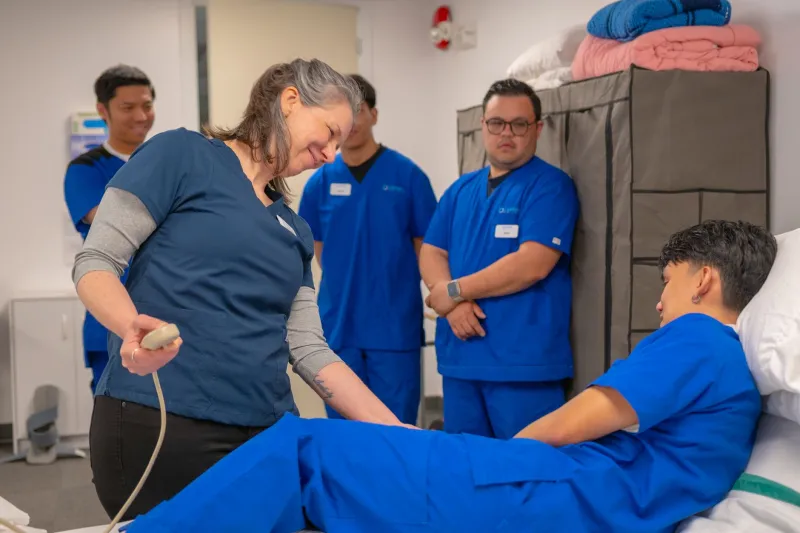
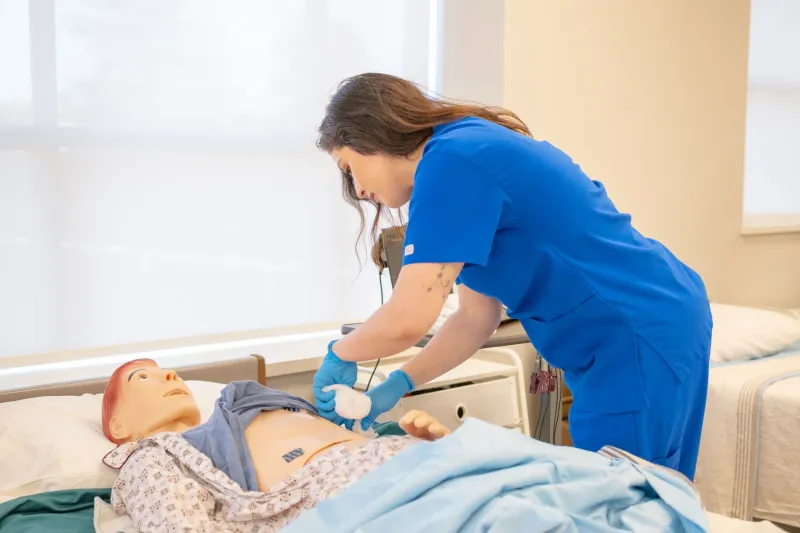
Simulation in medical training is not new. Standardized patients, mannequin-based task trainers, and laparoscopic simulators have been in use for decades. What has changed dramatically is the sophistication of these tools and the role artificial intelligence plays in powering them.
Modern AI-driven virtual patient platforms can replicate thousands of clinical scenarios with dynamic, branching narratives that respond to a trainee's decisions in real time. A medical student practicing the workup of chest pain, for example, may find the virtual patient's symptoms evolving differently depending on whether they ordered an EKG promptly or delayed the assessment. These platforms do not merely test knowledge — they simulate the cognitive pressure of clinical decision-making in a way that a multiple-choice question simply cannot.
Several U.S. medical schools have begun integrating these platforms into their pre-clerkship curricula, using them to bridge the gap between classroom instruction and clinical rotations. The early data are encouraging. Studies published in academic medical education journals have found that students who trained extensively with AI-powered simulators demonstrated faster skill acquisition and greater diagnostic confidence when transitioning to real patient care environments.
Predictive Learning Analytics: Knowing What a Student Needs Before They Do
Beyond simulation, artificial intelligence is reshaping how medical educators understand and respond to individual learner needs. Learning management systems embedded with predictive analytics can now track patterns in how a student engages with course material — which concepts they revisit repeatedly, where their performance falters under timed conditions, and how their knowledge retention curves compare to cohort benchmarks.
This data-driven approach allows program directors and faculty to intervene earlier and more precisely than traditional assessment schedules permit. Rather than waiting for a shelf exam score to reveal a knowledge gap in cardiology, an AI-informed system can flag a struggling student weeks in advance and recommend targeted remediation resources.
At the residency level, some programs are piloting AI-assisted procedural assessment tools that use video analysis and motion-tracking to evaluate technical skills in real time. A surgery resident performing a laparoscopic procedure, for instance, might receive automated feedback on instrument handling efficiency and tissue management — feedback that would previously have required a senior surgeon's undivided attention to generate.
The Case for Thoughtful Integration, Not Wholesale Replacement
Despite the genuine promise of these technologies, medical educators would be wise to approach their integration with both enthusiasm and critical discernment. Technology-driven training environments excel at standardization and scalability, but clinical medicine is, at its core, a deeply human enterprise.
The therapeutic relationship between physician and patient — the ability to read nonverbal cues, to sit with uncertainty alongside a frightened family, to communicate a difficult diagnosis with compassion — cannot be meaningfully replicated by an algorithm. There is a legitimate concern among some medical educators that an over-reliance on AI-mediated training could produce technically proficient clinicians who are underprepared for the emotional and relational dimensions of care.
Furthermore, questions of equity deserve serious attention. AI systems trained on datasets that do not reflect the full diversity of the U.S. patient population risk embedding existing disparities into the next generation of clinical training tools. Medical schools and residency programs have an obligation to scrutinize the data foundations of any AI platform they adopt and to demand transparency from vendors about how their systems were built and validated.
What Medical Educators Should Prioritize Now
For institutions navigating this landscape, a few principles offer useful guidance. First, simulation and AI tools should be deployed to supplement — not substitute for — meaningful patient contact and mentored clinical experience. The goal is to ensure that when trainees encounter real patients, they arrive better prepared, not that they arrive having rarely practiced on anything other than a screen.
Second, faculty development must keep pace with technological adoption. Instructors who are unfamiliar with the pedagogical design of AI-driven platforms are poorly positioned to help students use them effectively. Investment in faculty training is not optional — it is foundational.
Third, outcomes assessment must evolve alongside the tools themselves. Institutions should resist the temptation to measure the success of AI-enhanced curricula solely through board exam pass rates or standardized patient encounter scores. Longitudinal tracking of clinical performance, patient safety metrics, and trainee wellbeing offers a more complete picture of whether these technologies are delivering on their promise.
A Defining Moment for Medical Education
The integration of artificial intelligence into clinical training represents one of the most significant shifts in medical education since the Flexner Report restructured American medical schools more than a century ago. Like that earlier transformation, this one carries both tremendous opportunity and real risk — and the decisions made by educators, institutions, and policymakers over the next decade will shape the physician workforce for generations.
At Zarmed University Health, we believe that advancing medical excellence requires engaging honestly with both the possibilities and the limitations of emerging technologies. The question before the field is not whether AI and simulation will become central to clinical education — that outcome is already unfolding. The more important question is whether the profession will guide that transition thoughtfully, keeping human-centered care at the heart of what it means to train a physician.