Alone in the Ward: Why Medical Education Must Prioritize Professional Belonging Over Transactional Networking
The Paradox of Crowded Isolation
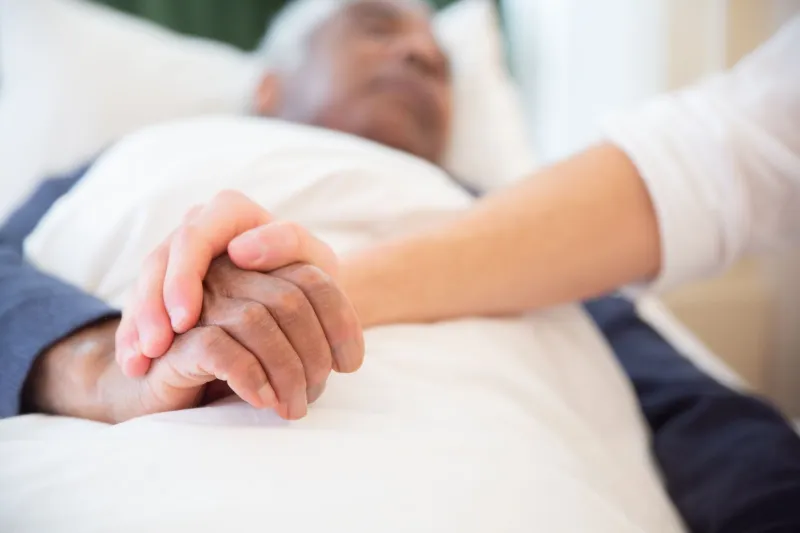
There is a particular kind of loneliness that flourishes in busy places. Walk through any major academic medical center in the United States and you will find corridors full of physicians—rounding, consulting, presenting, documenting. Yet beneath that surface activity, a quieter reality persists. Study after study has confirmed what many practitioners already sense: physicians are lonely, and the profession's training pipeline is a significant reason why.
A 2023 survey published in the Journal of General Internal Medicine found that nearly 45 percent of physicians reported experiencing meaningful professional isolation—a figure that rises sharply among residents and early-career attendings. This is not merely a personal misfortune. When physicians lack robust professional communities, the consequences extend well beyond their own wellbeing. Clinical decision-making suffers. Burnout accelerates. And patients, ultimately, absorb the cost.
The question medical educators must confront is not whether physician isolation is real—the evidence has settled that—but whether it is an inevitable feature of the profession or a correctable artifact of how training is designed.
How Medical Training Manufactures Isolation
To understand why physicians struggle to build genuine professional communities, it is necessary to examine what medical school actually teaches—implicitly and explicitly—about relationships with colleagues.
From the first year of medical school, the dominant message is one of individual performance. Grades, class rank, board scores, and clerkship evaluations are all calibrated to measure the individual in isolation from the group. Even in team-based learning environments, the underlying incentive structure rewards personal achievement. Students quickly learn that the colleague sitting next to them is simultaneously a collaborator and a competitor.
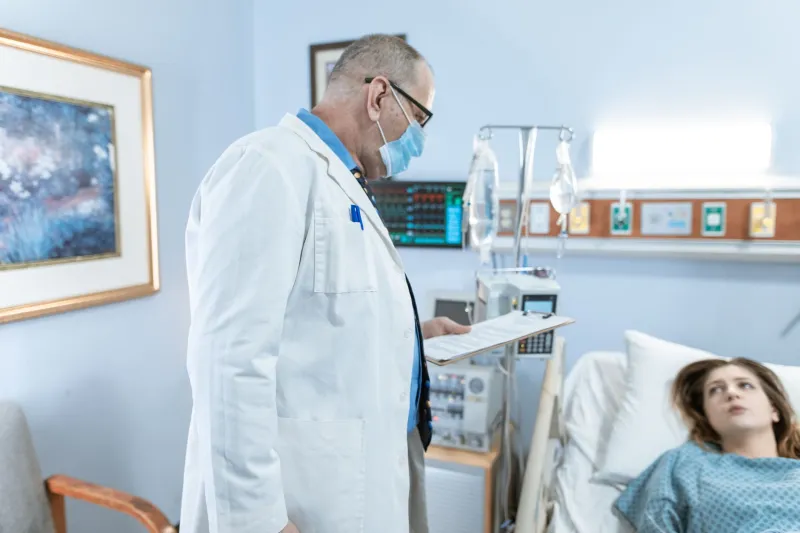
This dynamic does not dissolve at graduation. Residency programs, for all their emphasis on teamwork, are organized around hierarchies that can discourage authentic peer connection. Interns are acutely aware of their subordinate status. Attendings often maintain professional distance, whether by institutional culture or personal habit. The result is a training environment where physicians are surrounded by colleagues but rarely permitted—or equipped—to form the kind of reciprocal, trust-based relationships that constitute genuine community.
Furthermore, the culture of self-sufficiency that medical education has long valorized actively penalizes vulnerability. Admitting uncertainty, seeking peer support, or acknowledging the emotional weight of clinical work has historically been framed as weakness. In such an environment, even physicians who desperately want deeper professional connection may lack the language, the permission, or the structural opportunity to pursue it.
Why This Matters Clinically—Not Just Personally
The case for addressing professional isolation in medical education does not rest on compassion alone, though compassion would be sufficient. It rests on clinical evidence.
Research consistently links physician isolation to elevated rates of diagnostic error. A physician who lacks trusted colleagues with whom to think aloud—to present a puzzling case informally, to invite a second perspective without the formality of a consult—is more likely to anchor prematurely on an initial impression. The informal intellectual communities that flourish in well-connected clinical environments serve as a distributed error-correction system, one that isolated physicians cannot access.
The relationship between isolation and burnout is equally well-documented. The Mayo Clinic's Physician Wellbeing Index has repeatedly identified a sense of belonging and collegial support as among the strongest protective factors against burnout. Conversely, physicians who describe their professional relationships as primarily transactional—built around workflow necessity rather than genuine connection—report significantly higher rates of emotional exhaustion and depersonalization.
Depersonalization, notably, is not merely a symptom of burnout. It is a mechanism by which burnout degrades patient care. A physician who has lost the capacity to feel meaningfully connected to colleagues is at elevated risk of losing the capacity to feel meaningfully connected to patients.
What Genuine Community-Building Looks Like in Medical Training
Several institutions across the United States have begun treating professional community-building as a structured educational objective rather than something that will emerge organically if the right people happen to be placed in proximity.
At a programmatic level, this means designing residency cohort experiences that prioritize longitudinal relationship-building—not one-time orientation retreats, but recurring, structured opportunities for peers to engage with each other's clinical thinking, professional challenges, and personal experiences over time. Some programs have introduced peer mentoring models that pair residents across training years, deliberately disrupting the strict hierarchical sequencing that typically governs how knowledge and support flow through a program.
Curriculum reform efforts at several medical schools have begun incorporating formal instruction in what might be called community competencies: how to seek peer consultation without self-diminishment, how to offer meaningful collegial support, how to maintain professional relationships across institutional and specialty boundaries. These are not soft skills in the dismissive sense that phrase is sometimes intended. They are learnable, teachable behaviors with measurable clinical relevance.
Faculty development is equally critical. Attendings who model professional isolation—who conduct their clinical lives in ways that signal self-sufficiency as the professional ideal—transmit that model to trainees with the same fidelity as any formal curriculum. Institutions serious about addressing physician isolation must invest in preparing faculty to model and actively cultivate collegial community.
The Networking Trap
It is worth distinguishing, carefully, between professional networking and professional community—because medical education has generally offered the former while trainees need the latter.
Networking, as it is typically framed in professional development contexts, is transactional and instrumental. It is about building a roster of contacts who might prove useful: for letters of recommendation, for referral relationships, for career advancement. Networking events, LinkedIn connections, and specialty conference handshakes are the currency of this model.
Community, by contrast, is relational and reciprocal. It is characterized by mutual accountability, shared vulnerability, and a sense of genuine investment in one another's flourishing. Communities provide what networks cannot: the experience of being known, rather than merely recognized.
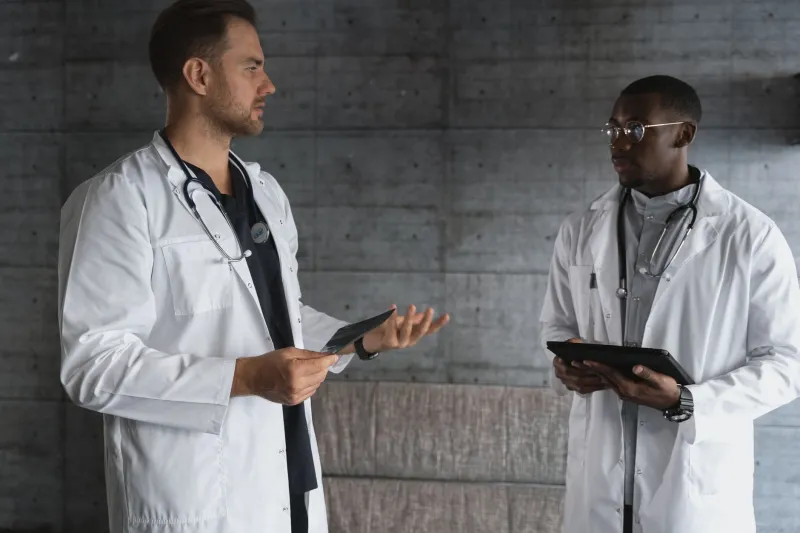
Physicians are not failing to build networks. Most are quite adept at the transactional mechanics of professional connection. What they are failing to build—and what medical training has failed to teach them to build—are communities in which they can be honest about uncertainty, honest about struggle, and honest about the full complexity of practicing medicine in the contemporary United States.
An Institutional Obligation
Medical schools and residency programs bear institutional responsibility for this deficit. The argument that professional community-building is a personal matter—something physicians must cultivate on their own time, with their own initiative—is no longer tenable given what the evidence reveals about the clinical and human costs of isolation.
Academic medical institutions that take seriously their mission to produce not merely competent but excellent physicians must reckon with the fact that an isolated physician is a compromised physician. The structural conditions that produce isolation are not accidental. They were built, and they can be rebuilt.
At Zarmed University Health, the commitment to advancing medical excellence through education necessarily encompasses the full architecture of what makes a physician effective. That architecture includes not only clinical knowledge and technical skill, but the professional relationships without which knowledge and skill are consistently underutilized. Teaching physicians to build genuine communities is not a wellness add-on. It is, at this point, an overdue core competency.