Knowing Is Not Enough: Why Medical Training Must Teach Physicians to Trust Their Own Judgment
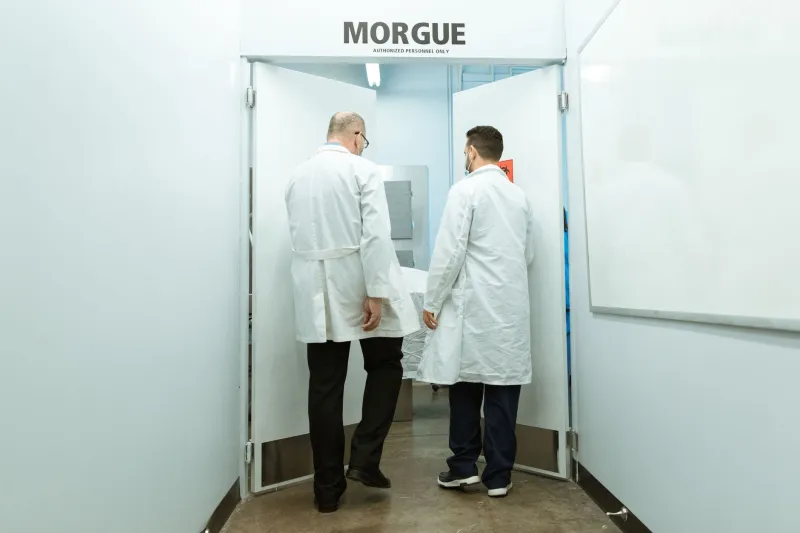
There is a particular kind of silence that attending physicians recognize immediately. It is the pause that falls when a third-year resident, fully capable of listing every diagnostic criterion for septic shock, stands at the bedside and waits for someone else to speak first. The knowledge is there. The hesitation is louder.
This phenomenon — often described informally as the confidence gap — has received growing attention from medical educators, residency program directors, and health systems researchers who are grappling with an uncomfortable truth: the traditional architecture of medical school training may be extraordinarily efficient at producing knowledgeable graduates while simultaneously failing to cultivate the decisional confidence those graduates need to function as independent clinicians.
Understanding why this gap exists, and what institutions can do to close it, has become one of the more consequential questions in contemporary medical education.
The Architecture of a Knowledge-First Curriculum
For most of the twentieth century, the dominant logic of medical education was additive. Learn anatomy, then physiology, then pathology, then pharmacology. Master the sciences before touching a patient. The underlying assumption was that sufficient knowledge, accumulated in sufficient quantity, would eventually produce clinical competence as a natural byproduct.
That assumption has proven partially correct and substantially incomplete.
Research consistently demonstrates that knowledge acquisition and judgment development are not the same cognitive process and do not respond to the same pedagogical interventions. A student who has memorized the Ottawa Ankle Rules has not necessarily internalized the capacity to apply them calmly when a distressed patient is in front of them, an attending is waiting down the hall, and the clinical picture is murkier than any textbook case ever suggested.
The problem is compounded by assessment culture. When standardized examinations — including the USMLE Step series — function as the primary gatekeepers of academic advancement, curricula inevitably orient toward the skills those examinations reward: information retrieval, pattern recognition under controlled conditions, and the elimination of incorrect answer choices. None of these skills are unimportant. None of them, however, directly train a physician to make a judgment call in an ambiguous situation and stand behind it.
What Confidence in Clinical Settings Actually Requires
Clinical confidence is not arrogance, and it is not the absence of uncertainty. Experienced clinicians describe it more accurately as the capacity to act decisively while holding uncertainty — to make the best available decision with incomplete information, communicate that reasoning transparently, and remain open to revision without being paralyzed by doubt.
Developing that capacity requires repeated exposure to genuine decision-making pressure, with appropriate scaffolding and structured reflection afterward. It requires, in other words, something that traditional didactic instruction is poorly designed to provide.
Several evidence-informed frameworks have emerged in recent years that speak directly to this deficit.
Graduated Autonomy as a Pedagogical Structure
One of the more promising approaches involves the deliberate, structured expansion of trainee autonomy over time — not as an informal byproduct of seniority, but as an intentional curricular design element.
Graduated autonomy frameworks ask programs to define, in advance, what decisions a trainee at a given stage should be making independently, which decisions should require supervised deliberation, and which should be escalated. The key distinction from traditional supervision models is that these frameworks treat independent decision-making as a skill to be practiced and assessed, not merely a privilege extended once competence is assumed.
Programs at several US academic medical centers have begun implementing structured autonomy ladders in which residents are explicitly assigned ownership of specific clinical decisions during rotations — and are then debriefed not only on the outcome but on the quality of their reasoning process. Early findings suggest that trainees exposed to these frameworks report meaningfully higher confidence in clinical decision-making by the end of residency, independent of case volume.
The underlying mechanism appears straightforward: confidence grows through the accumulation of successful decisions made under real conditions, not through the accumulation of knowledge about what correct decisions look like.
Deliberate Error Analysis and the Normalization of Uncertainty
A second pedagogical strategy gaining traction involves the systematic incorporation of error analysis into training — not as a punitive exercise, but as a structured learning methodology.
Traditional medical culture has treated clinical error as something to be minimized, concealed, and processed privately. This approach, while understandable given the stakes of medical practice, has had an unintended consequence: trainees learn to associate uncertainty with danger and decisional hesitation with safety. The physician who does not commit cannot be wrong.
Deliberate error analysis programs — sometimes called morbidity and mortality conferences redesigned for learning rather than accountability — create protected environments in which trainees examine cases where clinical judgment failed or nearly failed, with explicit focus on the cognitive and situational factors that contributed to the error. The goal is not to assign blame but to demystify the process by which experienced clinicians make mistakes, and to demonstrate that error is a normal feature of medicine that skilled practitioners navigate rather than avoid.
When trainees understand that uncertainty is a permanent condition of clinical practice rather than a personal deficiency, the psychological cost of making a decision under uncertainty decreases substantially. Confidence, in this framing, is not the belief that one will always be correct. It is the belief that one can reason well, act appropriately, and recover effectively when wrong.
Simulation Environments as Confidence Laboratories
High-fidelity simulation has long been positioned as a tool for procedural skill development. Its potential as a confidence-building intervention for clinical decision-making has received comparatively less attention, though the evidence is accumulating.
When simulation scenarios are designed specifically to place trainees in ambiguous situations — cases where the correct answer is genuinely unclear, where multiple reasonable paths exist, and where the trainee must commit to a course of action and defend it — they create a rehearsal space for precisely the cognitive experience that real clinical practice demands.
The critical design element is debriefing. Simulation without structured reflection produces limited transfer. When facilitated debriefing focuses explicitly on how the trainee made their decision — what information they weighted, what they discounted, when they felt uncertain and how they managed that uncertainty — it builds the metacognitive awareness that underlies durable clinical confidence.
An Institutional Responsibility
It would be easy to frame the confidence gap as a trainee problem — a matter of individual personality or psychological resilience. That framing is both inaccurate and counterproductive.
The evidence suggests clearly that confidence in clinical judgment is a developmental outcome, not a fixed trait. It responds to educational design. Institutions that invest in graduated autonomy structures, normalize error analysis, and build simulation curricula around decision-making rather than procedure execution will produce graduates better prepared for the realities of independent practice.
For medical educators, the implication is direct: designing a curriculum that produces knowledgeable graduates is necessary but no longer sufficient. The physician who hesitates at the bedside — not from ignorance but from an undertrained capacity for self-trust — is a product of the educational environment that formed them.
Addressing the confidence gap is, ultimately, not a wellness intervention or a remediation strategy. It is a core function of medical education, one that deserves the same rigorous attention that institutions have historically reserved for knowledge transmission. Teaching physicians what to know has never been the hard part. Teaching them to trust what they know is the work that remains.