Lost in Translation: The Hidden Cost of Poor Communication Between Physicians and Nursing Staff
When Words Fail, Patients Suffer
In a busy urban teaching hospital, a nurse documents a patient's deteriorating vital signs and flags the concern through the electronic health record. The attending physician, managing a full caseload, interprets the note as routine. Hours later, the patient codes. The clinical facts were all present. The communication, however, was not.
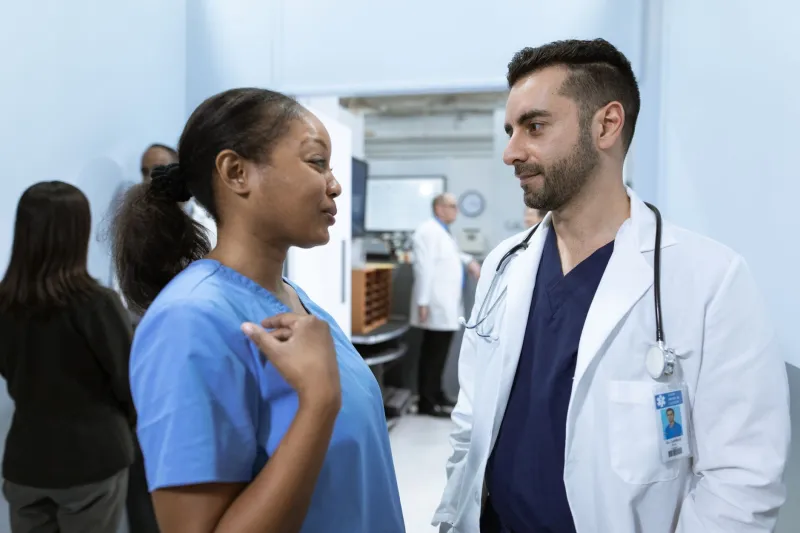
Scenarios like this are not aberrations. According to the Joint Commission, communication failures are implicated in roughly 70 percent of sentinel events—unexpected deaths and serious injuries—reported by accredited US healthcare organizations. Yet despite decades of interprofessional education (IPE) mandates, collaborative practice frameworks, and team-training workshops, the gap between how physicians and nurses communicate in theory versus in practice remains alarmingly wide.
For medical educators, this is not simply a patient safety problem. It is a curriculum problem—one that demands honest examination of how healthcare professionals are trained to interact with one another from the earliest stages of their education.
The Roots of Professional Siloing
To understand why communication breaks down, one must first understand how healthcare professionals are educated in isolation. Medical students and nursing students in the United States typically train in parallel tracks, sharing campus space but rarely sharing meaningful clinical learning experiences. Each discipline develops its own professional identity, vocabulary, and hierarchy—before ever working together in a real care setting.
Physicians are trained to communicate in concise, diagnosis-focused language. Nurses are trained to document comprehensively, using narrative-driven assessments. Neither approach is wrong, but when these two communication styles collide at the bedside—under time pressure, with incomplete information—the results can be catastrophic.
This professional siloing is reinforced by longstanding cultural hierarchies. Studies published in academic journals such as the Journal of Nursing Education and Academic Medicine have consistently documented that nurses frequently hesitate to escalate concerns directly to physicians, fearing dismissal or professional reprisal. Physicians, in turn, may not fully appreciate the clinical observations embedded in nursing documentation. The result is a system in which critical information exists but does not travel.
Why Classroom-Based IPE Often Misses the Mark
Over the past two decades, accreditation bodies including the Liaison Committee on Medical Education (LCME) and the Accreditation Council for Graduate Medical Education (ACGME) have incorporated interprofessional competencies into their standards. Most US medical schools now offer some form of IPE, ranging from joint case discussions to standardized patient encounters shared between medical and nursing students.
The intentions are sound. The outcomes, however, are frequently underwhelming.
The core problem is one of transfer. Skills practiced in a low-stakes classroom environment do not automatically translate to the cognitive and emotional pressures of a real intensive care unit or emergency department. When a first-year resident is managing three simultaneous admissions at 2:00 a.m., the structured communication frameworks learned in a workshop three years earlier are rarely the first thing that comes to mind.
Research supports this concern. A 2021 systematic review in BMJ Open Quality found that while IPE interventions reliably improved attitudes toward collaborative practice, evidence of sustained behavioral change in actual clinical settings remained limited. Students learned to value teamwork; they did not always learn to practice it under duress.
High-Fidelity Simulation: Replicating the Pressure
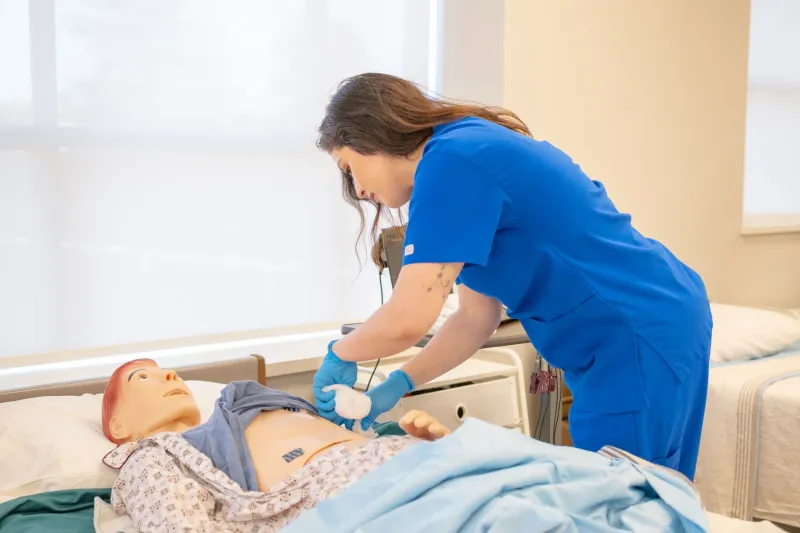
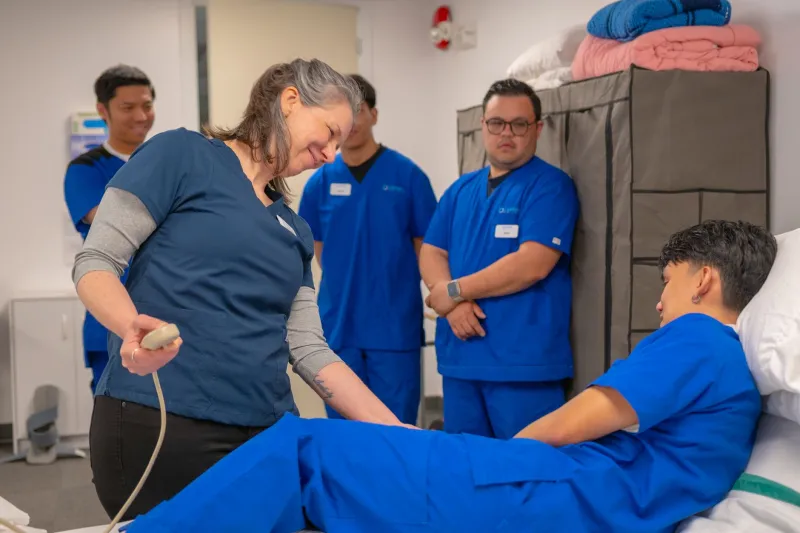
The most promising advances in interprofessional communication training are emerging from simulation centers that deliberately recreate the chaos of real clinical environments. High-fidelity simulation—using sophisticated mannequins, realistic clinical scenarios, and cross-disciplinary teams—places medical residents, nursing staff, and allied health professionals in the same room, managing the same crisis, in real time.
Leading academic medical centers, including those affiliated with major university health systems in the Northeast and Pacific Coast, have reported measurable improvements in communication metrics following structured simulation programs. Participants do not simply role-play collaboration; they experience the friction of it. Debriefing sessions that follow these exercises are equally critical, providing a structured space to examine where communication broke down and why.
Structured communication tools have also demonstrated meaningful results when implemented consistently. The SBAR framework—Situation, Background, Assessment, Recommendation—was originally developed by the US Navy and adapted for healthcare use at Kaiser Permanente. When genuinely embedded into institutional culture rather than introduced as a one-time training exercise, SBAR has been shown to reduce ambiguity and improve the speed of clinical decision-making.
TeamSTEPPS, a training system developed by the Agency for Healthcare Research and Quality (AHRQ) and the Department of Defense, represents another evidence-informed approach. Programs that have integrated TeamSTEPPS into both undergraduate medical education and hospital onboarding have reported reductions in adverse events associated with communication failures.
What Medical Education Must Reckon With
For institutions committed to advancing interprofessional communication, the evidence points toward several structural shifts that go beyond adding an IPE module to an existing curriculum.
First, training must be longitudinal. A single interprofessional workshop during the first year of medical school does not build the kind of durable communication habits that survive the pressures of residency. Programs that embed collaborative practice experiences throughout all four years of medical training—and continue them into graduate medical education—produce more consistent results.
Second, assessment must reflect the skill. If interprofessional communication is genuinely valued as a clinical competency, it must be evaluated with the same rigor applied to clinical knowledge. Observed structured clinical examinations (OSCEs) that include nursing and allied health confederates, peer evaluations from non-physician team members, and simulation-based performance reviews are all mechanisms that can make the invisible visible.
Third, institutional culture must align with educational goals. Even the most sophisticated simulation program will struggle to produce lasting change if trainees enter hospitals where hierarchical communication norms remain entrenched. Medical education does not end at graduation; it continues in every clinical environment a physician inhabits.
A Shared Language Is a Learnable Skill
The communication crisis between physicians and nurses is not inevitable. It is the product of educational systems that have historically trained healthcare professionals in isolation and then expected them to collaborate seamlessly under pressure. Closing this gap requires recognizing interprofessional communication not as a soft skill but as a core clinical competency—one that must be taught, practiced, assessed, and continuously refined throughout a medical career.
The patients waiting in those hospital rooms cannot afford for healthcare teams to still be learning to talk to one another at the bedside. That education must happen before they arrive.