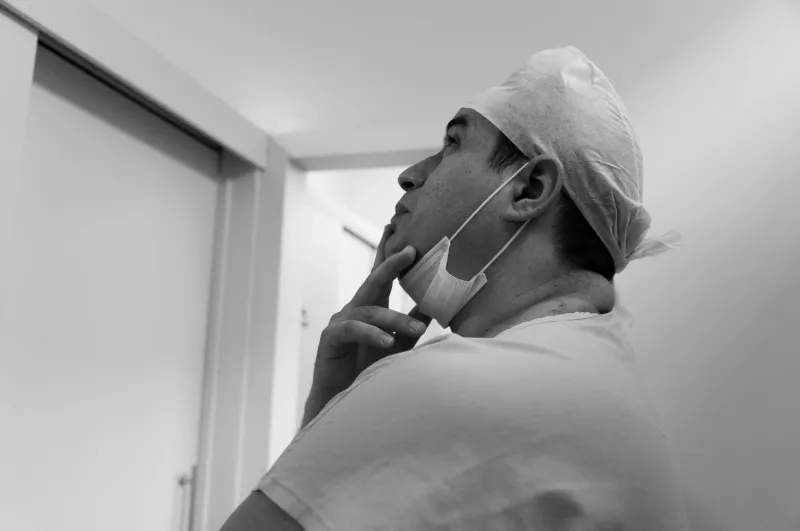
Sown in Medical School, Harvested in Burnout: What Longitudinal Research Tells Us About Physician Suffering
Photo: Internet Archive Book Images, No restrictions, via Wikimedia Commons
The conversation about physician burnout in the United States has grown considerably more sophisticated over the past decade. What was once dismissed as individual weakness or poor stress management is now widely recognized as a systemic problem with serious implications for patient safety, workforce sustainability, and public health. Yet even as the discourse has matured, a critical dimension of the problem remains underexamined: the degree to which burnout trajectories are shaped not during residency or attending practice, but during the four years of medical school that precede them.
Longitudinal studies are beginning to fill this gap — and their findings are both sobering and actionable.
What the Data Reveals
Research published in academic journals including Academic Medicine and JAMA Internal Medicine has tracked medical students from matriculation through attending practice, documenting how early experiences correlate with long-term wellbeing outcomes. The patterns that emerge are consistent across studies. Students who report high levels of institutional stress tolerance — meaning schools that normalize distress rather than addressing it — show elevated rates of emotional exhaustion and depersonalization years later, even after controlling for specialty, practice setting, and work hours.
Mentorship quality emerges as one of the strongest predictive variables. Students who describe their preclinical and clinical mentors as supportive, accessible, and genuinely invested in their professional development report significantly lower burnout scores at five- and ten-year follow-up points. Conversely, students who trained under hierarchical, dismissive, or emotionally unavailable supervisors show elevated risk for the cynicism and disengagement that characterize burnout, regardless of subsequent training environments.
Peer support systems represent a third significant variable. Medical school cohorts that fostered genuine mutual support — rather than competitive dynamics that positioned peers as rivals — produced graduates with more robust professional identities and greater capacity for self-care under pressure.
The Culture Problem
Data points do not exist in a vacuum. Behind each statistical association is a cultural architecture that medical schools have constructed, often unconsciously, over generations. That architecture includes the valorization of self-sacrifice, the equation of exhaustion with dedication, and the implicit message that acknowledging struggle is incompatible with clinical competence.
These norms are transmitted not primarily through formal instruction but through the hidden curriculum — the behaviors modeled by attendings, the jokes made on rounds, the way students learn to respond when asked how they are doing. When a third-year student watches a resident work through a 30-hour shift without complaint and receives praise for doing the same, a lesson is learned that no syllabus explicitly teaches: that suffering is the price of belonging in medicine.
Longitudinal research suggests that students who internalize this lesson early are significantly more likely to exhibit maladaptive coping mechanisms — including substance use, social withdrawal, and the suppression of emotional distress — that compound over time and manifest as burnout in mid-career.
Redesigning the Foundation
The evidence base points toward specific, implementable reforms. First, medical schools must move beyond pro forma wellness programming — the single-session mindfulness workshop, the email about counseling resources — and integrate psychological safety into the institutional fabric of training. This means training faculty and residents to model help-seeking behavior, creating anonymous reporting mechanisms for toxic supervisory relationships, and measuring student wellbeing as seriously as board exam performance.
Second, mentorship must be treated as a structured competency, not an informal perk. Schools should require mentorship training for all clinical faculty, establish accountability metrics for mentoring relationships, and build protected time for meaningful mentor-mentee engagement into clinical rotations.
Third, peer support structures should be deliberately designed rather than left to chance. Longitudinal learning communities — small cohorts that remain intact throughout medical school — have shown promise in multiple institutional pilots as vehicles for building the relational trust that buffers against burnout.
The Cost of Inaction
Physician burnout costs the United States healthcare system an estimated $4.6 billion annually in turnover, reduced productivity, and increased medical errors, according to research from Stanford University. That figure does not account for the personal suffering of the physicians themselves, nor for the downstream effects on patients who receive care from clinicians operating in states of chronic depletion.
If longitudinal research is telling us that the conditions producing that suffering are established during medical school, then medical schools bear a direct responsibility to intervene. Framing wellness as a downstream concern — something to be addressed in residency or by employee assistance programs — is no longer scientifically defensible.
The roots of burnout grow in soil that medical schools prepare. It is within their power, and their obligation, to change what they plant.